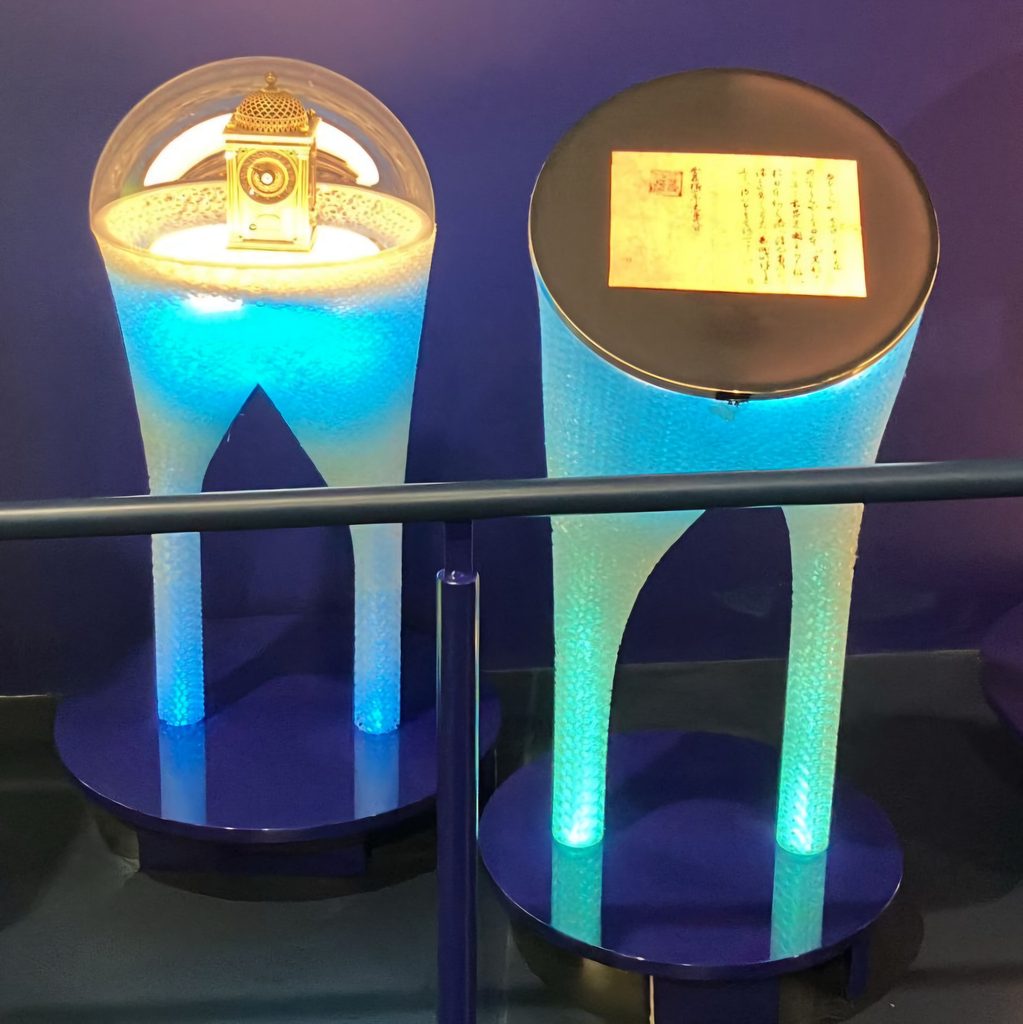
The central narrative of the Spanish Pavilion revolved around the oceans as a shared cultural, ecological, and geographical heritage. As part of this exhibition, we were commissioned to design and fabricate a family of bespoke exhibition elements inspired by the complex morphologies found in marine ecosystems. Drawing references from corals, sponges, and other oceanic organisms, the pieces sought to translate the intricate relationships between growth, porosity, structure, and adaptation into a tangible spatial experience.
Developed through computational design and advanced additive manufacturing processes, the project explored how digital technologies can materialize forms that would be difficult to conceive or produce through conventional means. The resulting pieces functioned both as informational supports and as atmospheric elements, contributing to the immersive character of the exhibition while reinforcing its overarching narrative.
The project reflects a techno-emotional approach to design, where computational processes are not used to generate arbitrary complexity but to establish meaningful connections between natural phenomena and human perception. Inspired by the adaptive geometries of corals and marine sponges, the pieces embody the capacity of digital fabrication to materialize forms that resonate both technically and emotionally, transforming information into experience and data into atmosphere.
Realized through the collaboration of architects, curators, engineers, fabricators, and public institutions, the project demonstrates how computational design and digital manufacturing can operate not merely as production tools, but as vehicles for storytelling, capable of translating ecological narratives into physical forms that invite curiosity, reflection, and emotional engagement.
Materials: PLA and acrylic
Design and fabrication: Atelier Professor Cuevas.
Curators: Smartandgreendesign and Ultralab
Location: Osaka, Japan.